Are you fascinated by lighthouses, or have you never considered visiting one? Whatever your case, the Maspalomas Lighthouse is a must-see. With the dunes as a backdrop and the Atlantic Ocean at its feet, this iconic building has been guiding ships for over a century and has become one of the great symbols of southern Gran Canaria. I'll tell you its history, what you can visit, and what other hidden gems to discover in the surrounding area. You'll surely see it in a whole new light!
You'll find the lighthouse at Punta de Maspalomas, within the municipality of San Bartolomé de Tirajana. The tower stands by the sea, between the expansive beach and the Meloneras promenade. Its location makes it easy to include in an afternoon at the beach or an evening stroll.
From the esplanade, you can observe two very different landscapes: the dune field to the east and the Meloneras area to the west. The lighthouse marks a convenient meeting point to begin exploring both.
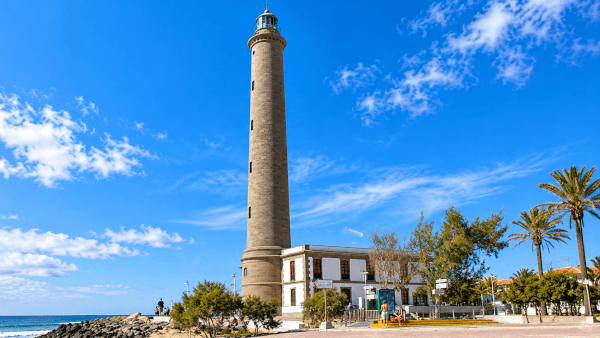
The Maspalomas Lighthouse tower and the white building at its base. (Photo: Aarón-ulpgc, CC0, via Wikimedia Commons)
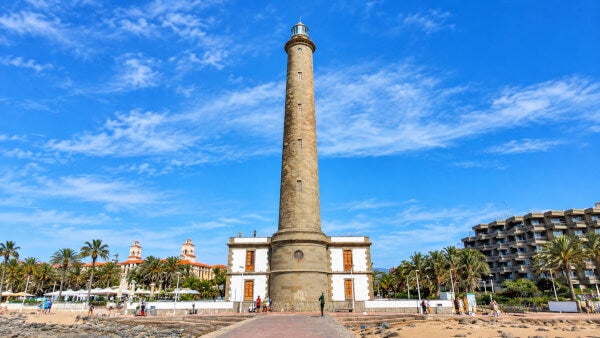
The tower is built of bluish-gray stone and measures approximately 55 meters. Its slender silhouette and the lantern at the top make it a visible landmark from various points along the coast.
At the base is the former lighthouse keeper's house, a two-story building that now serves a cultural purpose. Take a moment to observe how the architecture changes between the tower and the adjoining buildings: together they tell the story of how a lighthouse functioned before automation.
Construction took place during the latter part of the 19th century. The project is attributed to the engineer Juan León y Castillo. Work was completed in 1889, and the lighthouse began operating on February 1, 1890. Since then, it has been an integral part of Gran Canaria's maritime history.
Building a structure of this size on a coastline with virtually no access was a challenge. Much of the material had to be transported by sea. Imagining that undertaking helps to understand why the lighthouse was so important for navigation.
If you're interested in Juan León y Castillo, you can extend your visit with a trip to the León y Castillo House-Museum in Telde. It's a great stop if you're touring the island by car and want to combine coast, architecture, and history.
The Maspalomas Lighthouse remains operational. Its light serves as a navigational beacon and emits a distinctive sequence of flashes. Although you may view it as a monument, it's worth remembering that it continues to fulfill a vital maritime function.
Automation changed the way the lighthouse works: it no longer needs a family living permanently next to the tower. The building, however, retains the appearance of that original service complex.
The lighthouse is protected as a Site of Cultural Interest. This designation recognizes its historical and architectural value, beyond being one of the most photographed places in Maspalomas.
After being closed for a long time, the adjacent building reopened to the public in 2019. It houses a cultural space dedicated to the traditions and ethnography of Gran Canaria. It's an interesting way to complement a visit to the exterior.
Don't confuse the old lighthouse keeper's house with the signal tower: the cultural visit focuses on the adjacent building and does not involve climbing the lantern. Before you go, check which areas of the center are open.
The area around the lighthouse also serves as an information point and landmark for visitors to the south of the island. If you're short on time, take the opportunity to explore the building and then stroll towards the beach or Meloneras.
Opening hours for the cultural center may vary depending on the season, holidays, or scheduled activities. We recommend checking the municipal information before making a special trip to enter.
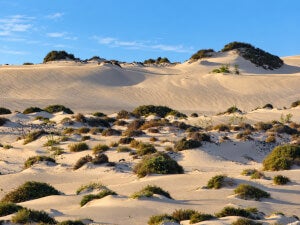
The Maspalomas Dunes form a protected natural area of great scenic value. Here, sand, wetlands, and vegetation adapted to a very particular coastal environment coexist. To enjoy it without damaging it, use the designated paths and respect the marked areas.
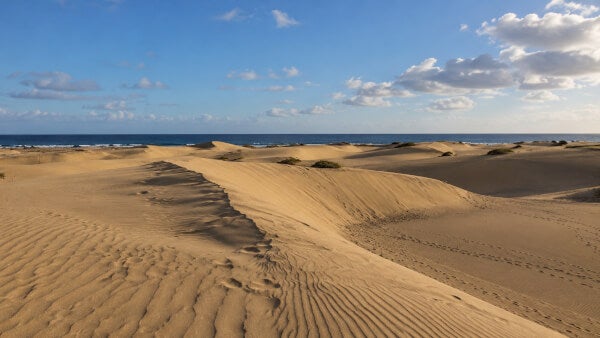
The wind constantly shapes the sandy landscape. That's why, even if you return to the same viewpoint, you might find different shapes and shadows.
Tip : Early morning or late afternoon light is usually especially beautiful for photographing them.
The Maspalomas Dunes, with the sea in the background. (Photo: Marcela Střelcová, CC BY-SA 4.0, via Wikimedia Commons)
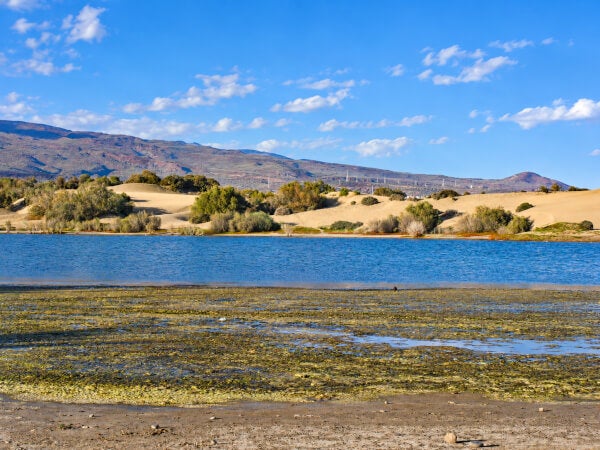
The Maspalomas Pond is a wetland near the beach where you can observe birds, including migratory species. Bring binoculars if you enjoy nature and keep your distance so as not to disturb the animals.
The oasis's palm grove completes the contrast between the dunes and the water. Native Gran Canaria wildlife also inhabits the surrounding area. It's a fragile environment, so please stay on the paths and don't feed the animals.
You can enjoy the scenery by taking a stroll along the designated paths and viewpoints. There are also organized tourist activities in the area, but it's advisable to check that they comply with the protected area's regulations before booking.
If you'd like to explore the surrounding area, these three ideas will help you choose a route based on the time you have available. These are just suggestions: check the signage and access conditions on the day of your visit.
Walk
Approximate duration
For whom
Meloneras Lighthouse and Promenade
30–60 min
Comfortable seaside stroll
Lighthouse and dune viewpoints
1–2 h
Photography and landscape
Longer route via enabled access points
2–3 h
Anyone who wants to walk further
For any route, bring water, sun protection, and comfortable shoes. Avoid the hottest hours of the day and do not cross restricted areas of the dunes, even if they appear marked on an old map.
The Maspalomas Lagoon, with the dunes behind it. (Photo: Enric, CC BY-SA 4.0, via Wikimedia Commons)
The lighthouse is located next to the Meloneras promenade and a short distance from the Maspalomas Lighthouse bus station. You can get there by public transport, taxi, or car. If you're staying near the beach, you'll probably find it more pleasant to walk there.
From Gran Canaria Airport, there are bus connections to various points in the south of the island. Frequency, schedules, and stops may vary depending on the route and day, so it's advisable to check the latest service information before starting your journey.
The table below provides information on the bus routes that connect the airport to various points in Gran Canaria. This will help you identify the options that best suit your destination.
Line
Reference connection
What to check
66
Airport and Maspalomas area
Current stops and schedules
90
Airport and south of Gran Canaria
Direction, stops and frequency
36
Connection between Telde, airport and south
Service in force
5
Nighttime connection service
Updated schedule and route
The Faro de Maspalomas bus station is just a short walk from the tower. If your accommodation is in another area of the south, check if the bus goes directly there or if you need to change buses.
By car, the GC-1 connects the airport to the south of Gran Canaria. Follow the signs for Maspalomas and Meloneras and use your GPS to reach your chosen parking spot, as some streets near the promenade have access restrictions.
There are regulated parking areas and private parking lots nearby. Demand is usually higher during peak season, so allow plenty of time to park and avoid arriving at the last minute if you have a reservation.
If you want to take advantage of the trip to discover other corners of the island, you can get inspiration from our best road trips around Gran Canaria to organize your journeys and enjoy the trip.
Next to the lighthouse you'll find Maspalomas beach and the Meloneras promenade, two ideal spots for a stroll along the seafront and a stop for lunch. You can visit both in a single trip without needing a car.
If you'd like to spend more time on the sand, connect your walk to the designated beach areas and enjoy the dune landscape from the permitted access points. Remember that the wind and waves can change throughout the day.
With more time, you can explore other parts of Gran Canaria, such as Telde or the capital, Las Palmas. Having a car will give you the freedom to discover different areas of the island and return to Maspalomas at your own pace.
Maspalomas typically enjoys mild temperatures for much of the year. Sunrise and sunset offer pleasant light for walking and photography, avoiding the hottest hours of the day.
If you plan to visit the lighthouse's cultural center, check its opening hours first. If you'd rather see the tower from the outside and stroll through Meloneras, you'll have much more flexibility in your visit.
You don't need a car to visit the lighthouse if you're staying in Maspalomas or Playa del Inglés. However, if you want to explore the beaches, towns, and viewpoints of Gran Canaria, DoYouSpain can help you compare rental cars in Maspalomas and choose an option that suits your trip.
Before booking, check the requirements for renting a car, especially the documentation, minimum age, and conditions for the additional driver.
If you're relying on buses, check the last return services before you leave. Schedules may vary on weekends and public holidays.
If your driving license is from a country outside the European Union, check the required documentation and our guide on the international driving permit before traveling.
The tower still functions as a maritime beacon and is not open to the public. What you can visit, when it is open, is the cultural space in the adjacent building.
The light signal is designed to be visible from the sea and has a range of several tens of kilometers under suitable conditions. Its actual visibility also depends on the weather .
Christmas decorations and activities change from year to year. If you're traveling in December, check the local calendar to see if there will be any special lighting.
If you visit Tenerife, you can't miss a stroll through San Cristóbal de La Laguna, a charming city with a historic center declared a World Heritage Site. Its cobbled streets, colorful houses, traditional Canarian patios, and old convents invite you to explore it at a leisurely pace. Ready to discover ...
As the author of this article, I have to confess something: the Mosque-Cathedral of Córdoba will leave you speechless. And I say this from personal experience. I was lucky enough to discover it on a guided night tour, and believe me, exploring it after dark has a special charm. If ...
Looking for a getaway to disconnect from your routine and enjoy the sea? Fuerteventura is a sure bet, and Corralejo is one of those places that will win you over with its white sand beaches, impressive dunes, and unique landscapes. In this guide, I'll tell you what to see in ...
If you visit Valencia, there's one gem you absolutely must see: the Central Market. Located in the heart of the city, this iconic modernist market of iron and glass is the perfect place to discover the most authentic flavors of Valencian cuisine, buy fresh produce, and soak up the local ...
Welcome to Lanzarote ! The adventure begins the moment you step off the plane, exploring an island of volcanic landscapes, golden sand beaches, and charming villages. But before you set off to discover it all, it's time to plan your arrival. César Manrique-Lanzarote Airport (ACE), located just a few kilometers ...
Can you imagine strolling through streets steeped in history and ending the day with a dip in natural pools by the Atlantic? In Garachico, one of Tenerife s most charming towns, you can enjoy both experiences. Its commercial past is still evident in the streets of the old town, while ...
Fancy discovering a charming corner of nature during your trip to Málaga ? Just outside the city, the La Concepción Botanical-Historical Garden awaits, a true oasis where you can travel from one continent to another without leaving the province. Stroll among palm trees, discover exotic species, and be captivated by ...
If you're looking for hiking trails near Madrid, there are several options to enjoy the mountains, forests, and waterfalls without venturing too far from the capital. In this guide, I suggest three excursions: El Paular and Los Batanes, the Roman road of Cercedilla, and the Purgatorio Waterfalls . You'll find ...
Every January 20th, San Sebastián is filled with drums and barrels to celebrate the Tamborrada, one of the most emblematic festivals in the Basque Country. If you're thinking of visiting the city, I'll tell you what the Tamborrada of San Sebastián is, what its most special moments are, and how ...
Do you have a date with music, theater, or some other show in Pamplona ? Then remember this name: Baluarte. Located next to the iconic Citadel and just a stone's throw from the old town, this modern convention center and auditorium is one of the city's major cultural landmarks. In ...
Alcalá de Henares is one of those destinations that has everything you need for a two-day getaway: history, charming streets, excellent cuisine, and corners that transport you to another era. Just over half an hour from Madrid, this city, birthplace of Miguel de Cervantes (1547-1616), invites you to stroll at ...
Málaga becomes the perfect destination when it comes to a Christmas getaway. With the Mediterranean as its backdrop, Málaga is filled with lights, music, and a festive atmosphere, creating a unique ambiance for enjoying a break. DoYouSpain tells you everything you can't miss this Christmas in Malaga. Discover how and ...