Looking for a getaway to disconnect from your routine and enjoy the sea? Fuerteventura is a sure bet, and Corralejo is one of those places that will win you over with its white sand beaches, impressive dunes, and unique landscapes. In this guide, I'll tell you what to see in Corralejo and the Fuerteventura Dunes, which are the best beaches, and how to get there to make the most of your visit.
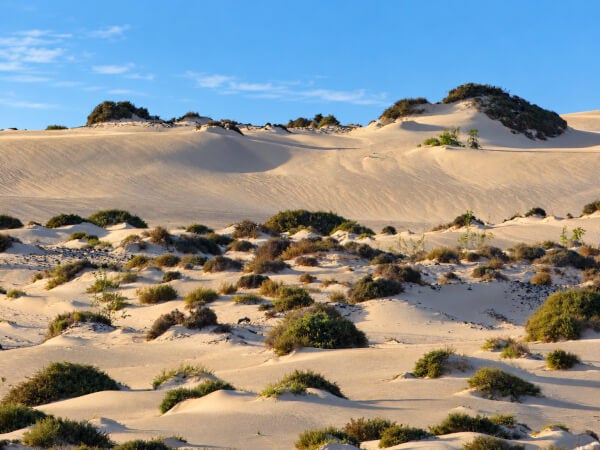
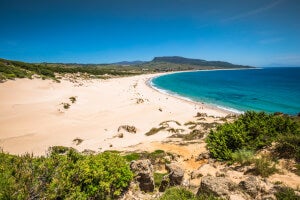
Corralejo belongs to the municipality of La Oliva, in northern Fuerteventura. Right next to it lies the 2,668.7-hectareCorralejo Natural Park. It's a landscape of enormous white sand dunes that contrast with the blue of the Atlantic and the island's volcanic terrain. The park stretches for about 10 km along the coast and is 2.5 km wide, encompassing the volcanic cone of Montaña Roja .
The dunes cover almost eight kilometers of coastline and reach heights of up to 50 meters. The sand is of marine origin, formed from the erosion and fragmentation of various mollusk shells. The northern part of the island contains the largest dune field in the Canary Islands.
However, in the southern part of Fuerteventura, the sand gives way to volcanic terrain formed by solidified basalt flows. Beneath the dunes lies an ancient lava field over 50,000 years old, with dark and ochre hues. Furthermore, fossils appear in some areas, providing further insight into the geological history of this corner of Fuerteventura.
The dunes next to Grandes Playas, in Corralejo. (Photo: Jarek Prokop, CC BY 3.0, via Wikimedia Commons)
The Corralejo dunes are not just a spectacular landscape for walking or taking photos. This natural area is also home to numerous species that have learned to live in an environment marked by sun, wind, and water scarcity. Its history as a protected area began in 1982, when it was included along with the nearby islet of Lobos. In 1994, the two areas became administratively separate. Furthermore, the park is designated a Special Protection Area for Birds .
If you pay attention during your walk, you might spot a Canary Islands houbara bustard, a stone-curlew, or a kestrel. Rabbits and Majorera goats also inhabit the area. Among the sand and more arid terrain grow plants adapted to these conditions, such as sea grape, rushes, and sea buckthorn. These small details demonstrate that, even in a landscape that seems desert-like, there is much more life than we imagine.
Visiting the park is free, but there's something important to keep in mind: you can't just walk anywhere on the dunes. To protect this environment, you must stay on the marked trails, respect the signposted areas, and avoid stepping on the protected vegetation. This way, you can enjoy the scenery without contributing to its deterioration.
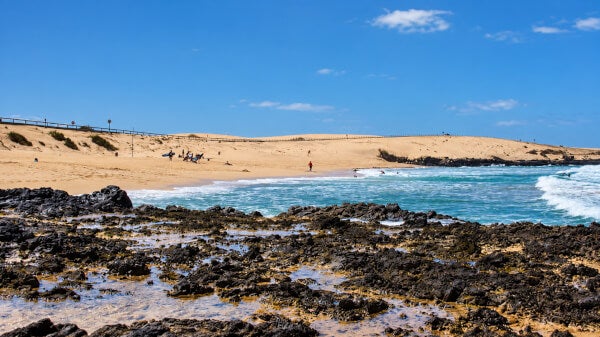
The Grandes Playas de Corralejo (Great Beaches of Corralejo) border the dunes for approximately 9 km. With the trade winds, the beaches are filled with corralitos : stone arches built by hand to protect them from the wind.
Beach
Approximate length
Main features
The Black Bass
500 m
Plenty of amenities, children's play area, restaurants and gentle waves
The Donkey (Raised)
300 m
No amenities, gentle waves, and access only by car and public transport.
The Sand Dune
700 m
Designed for kitesurfing and windsurfing, with views of Lobos
The Moor
300 m
Suitable for surfing, with few amenities and views of Lanzarote and Lobos
The Old Man
More than 500 m
Protected from the waves, with lifeguards and some services
The beaches of Corralejo have much to offer, but it's best to be prepared to enjoy them without surprises. El Bajo Negro beach has been awarded the Blue Flag and is also a naturist beach. In fact, nudism is permitted in much of this coastal area.
Here you'll find virtually untouched landscapes, but don't expect to have all the amenities at hand. Many beaches lack beach bars, restaurants, and kiosks, and shade is scarce. It's best to bring plenty of water, sunscreen, and comfortable shoes for walking on the sand, which can get quite hot during the middle of the day.
And one last piece of advice : keep your mobile phone and camera safe, because the wind can lift fine sand and end up putting it where you least want it.
Still unsure which beach to choose? Our guide to beaches in Fuerteventura offers more options to compare and help you decide which one best suits your trip.
Are you more of a mountain person, or would you like to swap the beach for a hike through volcanic landscapes? If so, take note: Montaña Roja. This volcanic cone, reaching 312 meters in height, is a great option to lace up your walking shoes and discover another side of Fuerteventura. The route offers spectacular views of the north of the island, with the islet of Lobos and Lanzarote on the horizon.
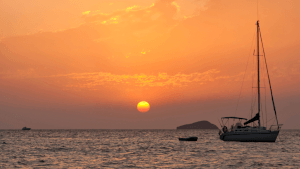
And if you prefer a more relaxed plan, you can end the day watching the sun set over the Atlantic. The Corralejo dunes are an ideal spot to enjoy the sunset, with the silhouette of Lobos Island in the background. A perfect way to end the day after a day at the beach.
Komoot offers three moderately difficult circular routes starting from Corralejo. The options range from a walk with views of Lanzarote to a longer one that crosses the dunes from the town's beach, allowing you to enjoy the scenery on foot at your own pace.
Route
Distance
Level difference
View of Lanzarote
10.9 km
60 m
Popcorn Beach and Dunes
12.6 km
40 m
Dunes from Corralejo Beach
14.8 km
50 m
If you're a sports enthusiast, the Fuerteventura Dunes International Half Marathon (21 km) takes place every November, with 95% of the route within the park. You can find the exact dates on the race website .
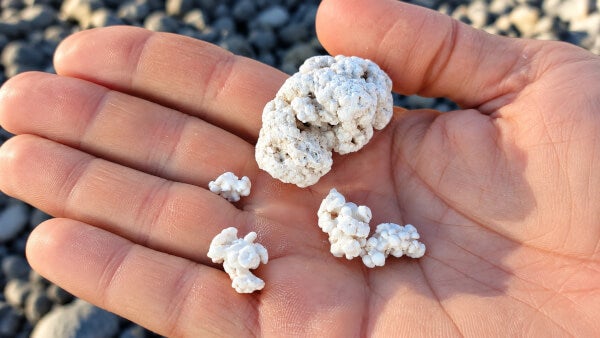
Bajo de la Burra beach, better known as Popcorn Beach, is located near Corralejo, in the municipality of La Oliva. Its name is no coincidence: upon reaching the shore, you'll see small white formations that resemble popcorn scattered on the sand. But what are they really?
Although at first glance they may look like stones or pieces of coral, they are rhodoliths, coralline algae that grow underwater and acquire their characteristic whitish hue over time. The movement of the waves shapes these formations, giving them their distinctive appearance.
And what's most surprising is how slowly they form. A rhodolith of about 2.5 centimeters can take at least 25 years to grow, and some specimens are thousands of years old. So, although it might be tempting to take a popcorn as a souvenir, it's best to leave them where they are and enjoy this unique landscape. I also advise against swimming at this beach, not only to protect the seabed but also because of the strong waves.
Pieces of maerl that look like popcorn, from Majanicho beach. (Photo: Erik del Toro Streb, CC BY 4.0, via Wikimedia Commons)
The journey to Popcorn Beach is part of the adventure. From Corralejo, you can hike along a 5-kilometer trail, which takes about an hour. If you prefer cycling, the trip will take about 20 minutes. Another option is to drive along Majanicho Street.
Once there, keep in mind that you're in a natural environment with no guaranteed services, so bring water and some snacks to enjoy your visit without any surprises. Also, the beach's popularity on social media has led to increased visitors, so you might not find the peace and quiet you're expecting.
Editor's tip : If you're looking to enjoy the scenery with fewer people, try visiting early in the morning.
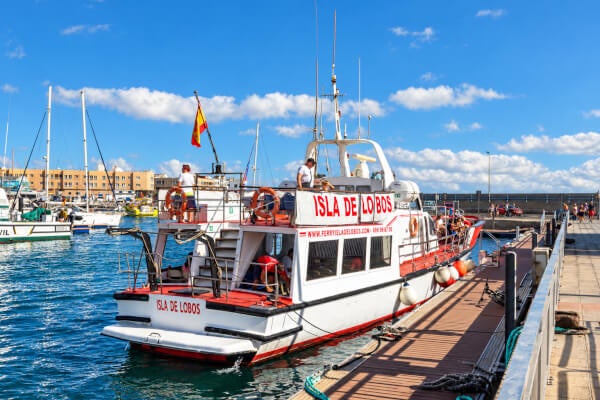
If you're spending a few days in Corralejo, there's one excursion I wouldn't leave out of your plans: a visit to Lobos Island. It's just 2 kilometers off the coast of Fuerteventura and you can get there by boat in about 15 or 20 minutes. It's a small, practically untouched natural paradise where you can swap the hustle and bustle of tourist areas for the tranquility of trails, coves, and volcanic landscapes.
The islet has an area of approximately 6 km² and a coastline of 14 kilometers. Today it remains uninhabited to preserve its environment, although its history is much more intriguing than it seems. For centuries it served as a refuge for pirates, and from 1860 onwards, workers associated with the Punta Martiño lighthouse also lived there.
To visit the island, you'll need to book a boat from the port of Corralejo and obtain authorization from the Fuerteventura Island Council. The permit is processed online in advance, the stay is limited to four hours, and daily access is capped at 400 people. It's advisable to check the current conditions before organizing your trip. Boat tickets for adults start at €8.50, while children between 4 and 11 years old receive a 35% discount.
Shipping company
First departure from Corralejo
Last return in winter
Last return in summer
Island of Wolves
09:45
17:15
18:15
Nortour Shipping Company
10:00
17:00
18:00
These are approximate times and may change depending on the season and weather. I recommend confirming them with the shipping company before you go.
Passenger boat to Isla de Lobos, in the port of Corralejo. (Photo: Photograph by Mike Peel (www.mikepeel.net), CC BY-SA 4.0, via Wikimedia Commons)
Once on the island, I recommend taking advantage of your time to explore its trails. One of the suggested routes passes by La Concha beach, continues towards La Caldera—at 127 meters, the highest point on the islet—and reaches the Punta Martiño lighthouse. The paths are marked and not particularly difficult, although it's important to bring water, sun protection, and comfortable shoes.
Keep in mind that services are very limited: there's only one beach bar for food and no accommodation. Therefore, it's best to come prepared and enjoy the excursion at a leisurely pace. If you're looking to discover another side of Fuerteventura, with nature, tranquility, and volcanic landscapes, Lobos Island is a getaway well worth the trip.
To reach Corralejo Natural Park, a car is one of the most convenient options if you want to explore the area at your own pace. The journey from Puerto del Rosario takes about 25-30 minutes along the FV-1, which skirts the park between kilometers 18 and 22. If you're still considering renting a vehicle during your vacation, we'll tell you why renting a car in Fuerteventura might be a good idea.
You can reach the park by road following the FV-3 ring road from Puerto del Rosario. There are two options: continue along the coastal road, which passes through the dunes, or take the inland route. However, keep in mind that there are plans to close the section that crosses the park once a new ring road is completed, so it's advisable to check which route is open before setting off.
If you prefer to travel by public transport, you can combine two buses. From the airport, take line 3 to Puerto del Rosario station and there change to line 6, which connects the capital with Corralejo.
Once in the park, remember that motor vehicles are not allowed in the protected natural areas. You will have to leave your car in the designated parking areas and continue on foot along the authorized trails. Parking spaces are limited, especially during peak season, so we recommend arriving early to find a spot and enjoy your visit at your leisure.
About 20 minutes by car from Corralejo is El Cotillo, where the coves of Los Lagos surprise with their volcanic reefs and natural pools of calm waters, ideal for enjoying the sea.
If you'd like to extend your trip, you can also take a ferry from the port of Corralejo to Lanzarote. The journey takes approximately 30 minutes, making it a great option to explore another island during your trip.
On the DoYouSpain website for renting a car in Fuerteventura, the airport is listed as a pick-up point, along with Corralejo Puerto and Corralejo Ciudad.
Not inside the park: Motor vehicles are not allowed and cars must be left in a parking lot. Parking on the protected sand or outside of authorized areas is also prohibited.
For trips with children, look for beaches with amenities and favorable sea conditions, such as certain areas of El Bajo Negro. Don't rely solely on calm water; observe the waves and the lifeguards' instructions.
No. Rhodoliths are part of the natural environment and should not be removed. Enjoy Popcorn Beach, take photos, and leave these formations where they are.
Adult tickets start from €8.50, with a 35% discount for children aged 4 to 11. Infants up to 3 years old travel free. Prices may vary depending on the ferry company and season.
As the author of this article, I have to confess something: the Mosque-Cathedral of Córdoba will leave you speechless. And I say this from personal experience. I was lucky enough to discover it on a guided night tour, and believe me, exploring it after dark has a special charm. If ...
If you visit Valencia, there's one gem you absolutely must see: the Central Market. Located in the heart of the city, this iconic modernist market of iron and glass is the perfect place to discover the most authentic flavors of Valencian cuisine, buy fresh produce, and soak up the local ...
If you're looking for hiking trails near Madrid, there are several options to enjoy the mountains, forests, and waterfalls without venturing too far from the capital. In this guide, I suggest three excursions: El Paular and Los Batanes, the Roman road of Cercedilla, and the Purgatorio Waterfalls . You'll find ...
Every January 20th, San Sebastián is filled with drums and barrels to celebrate the Tamborrada, one of the most emblematic festivals in the Basque Country. If you're thinking of visiting the city, I'll tell you what the Tamborrada of San Sebastián is, what its most special moments are, and how ...
Alcalá de Henares is one of those destinations that has everything you need for a two-day getaway: history, charming streets, excellent cuisine, and corners that transport you to another era. Just over half an hour from Madrid, this city, birthplace of Miguel de Cervantes (1547-1616), invites you to stroll at ...
Málaga becomes the perfect destination when it comes to a Christmas getaway. With the Mediterranean as its backdrop, Málaga is filled with lights, music, and a festive atmosphere, creating a unique ambiance for enjoying a break. DoYouSpain tells you everything you can't miss this Christmas in Malaga. Discover how and ...
Have a couple of days off and fancy discovering Murcia? Here's our guide to the best things to do in Murcia in a weekend, so you can make the most of your trip. At DoYouSpain, we've put together a route covering the places that are really worth your time. We've ...
Vigo's Christmas lights are switched on in mid-November and stay up until early January. During those weeks, the city centre fills with illuminated streets, Christmas markets and fairground rides, drawing visitors from all over Spain. More than 12 million LED lights have been announced for Christmas 2026-2027, and work on ...
Valencia is one of the top destinations for exploring the Mediterranean by car: beaches, picturesque towns, and rich history. If you are thinking about hiring a car in Valencia with DoYouSpain, this guide covers everything you need to know before booking. We go through the main points to make sure ...
If you want to enjoy nature, great local food, and charming mountain spots, exploring the Catalan Pyrenees by car is a brilliant option. It works well for any type of trip, especially if you're looking to get away from it all. Any time of year is a good time to ...
Alquilar un coche en Cádiz es la mejor opción para descubrir la provincia sin prisa. Te da la libertad de pasar de las playas de la Costa de la Luz a los pueblos de la Sierra de Grazalema en el mismo día, evitando las esperas y las malas combinaciones del ...
Travelling around Spain in autumn is the ideal choice if you want to enjoy a peaceful break at your own pace. Once summer comes to an end, temperatures drop, the roads are far quieter, and prices are usually much lower. It is the perfect time to go on a road ...